
There are many senior performance horses still competing up to the Olympic level. In this video, Dr. Ali Broyles offers some tips on caring for these older competitors. Broyles is a surgeon at Rood & Riddle Equine Hospital in Kentucky.
(Editor’s note: The content of this video is the expert’s approach to the topic. Please consult with your practitioner if you have questions.)
Simple Things First
Broyles said for the senior performance horse, you should consider the simple things first, such as body condition.
It’s important that senior performance horses are not overweight, Boyles said, especially become older horses commonly develop arthritis. “Any excess weight will put undue stress on those arthritic joints,” she said. “It is better for them to be a little underweight than overweight.”
Workload is also important for these older working horses. “Older horses hopefully are going to be more experienced, so they don’t necessarily need the hours of training every week that the younger horse requires,” she noted. “You need some level of fitness, but don’t overtrain those horses.”
Broyles said if your senior performance horse is not enjoying its job as much as it used to, it might be a sign that they don’t need to work as hard as they did when they were 6 or 7. “I would focus on exercising them to the level of fitness that they need to be for their intended use,” Broyles said. “And make sure you are not exercising them to train the rider.”
Is the Horse in Pain?
If the horse no longer seems to be enjoying its job, Broyles recommends doing a lameness exam. “This can figure out if there is some pain or lameness issue that is causing that potentially behavioral problem,” she said.
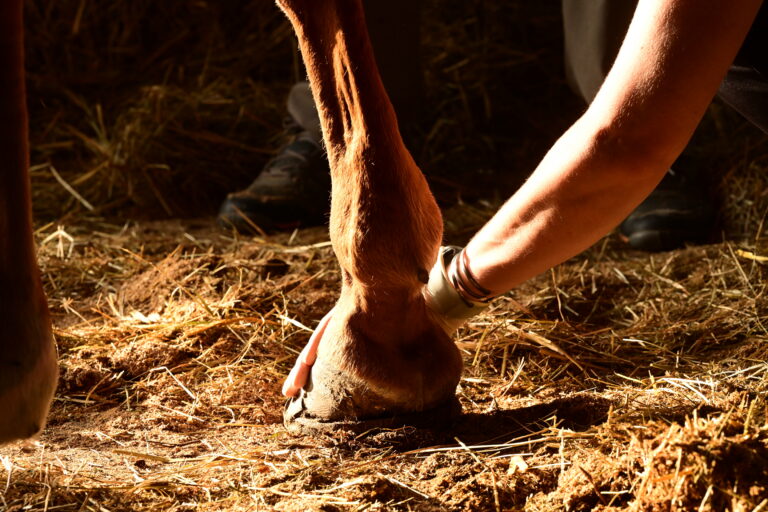
A typical lameness exam involves a veterinarian watching the horse jog in both directions; using hoof testers on all feet; palpating joints, tendons, and ligaments; and performing specific joint flexion tests.
“Following that lameness exam, we might do more diagnostics,” said Broyles. “If the horse flexes sore in its hocks, then we would do more diagnostics such as radiographs. We can see if there is evidence of arthritis that we could target for treatment.”
Treating Osteoarthritis
Veterinarians often recommend oral joint supplements for senior performance horses with osteoarthritis, said Broyles. Typically, these supplements have the same ingredients as human supplements, such as glucosamine, chondroitin, and/or MSM.
“The problem with oral supplements in horses is that there is some controversy on whether they are absorbed appropriately and if they are truly effective,” she said.
Broyles often recommends Adequan (polysulfated glycosaminoglycan), which is an intramuscular injection. You can give your horse the injection yourself or ask your veterinarian to give it, depending on your comfort level with giving injections, she said.
“There also is some data that tells us it does work,” Broyles added. “It works as an anti-inflammatory for the joint and gives lubrication to the joint. It potentially could help repair cartilage. We do know that it makes horses feel better. There is data to show that lameness scores improve after given a treatment regimen of Adequan.”
If the lameness exam shows a specific joint that is affected by osteoarthritis, then Broyles said veterinarians might use intra-articular therapies such as corticosteroid injections or orthobiologics such as IRAP.
PPID (Cushing’s Disease)
Some senior performance horses have pituitary pars intermedia dysfunction (PPID or equine Cushing’s disease). They might also be insulin resistant.
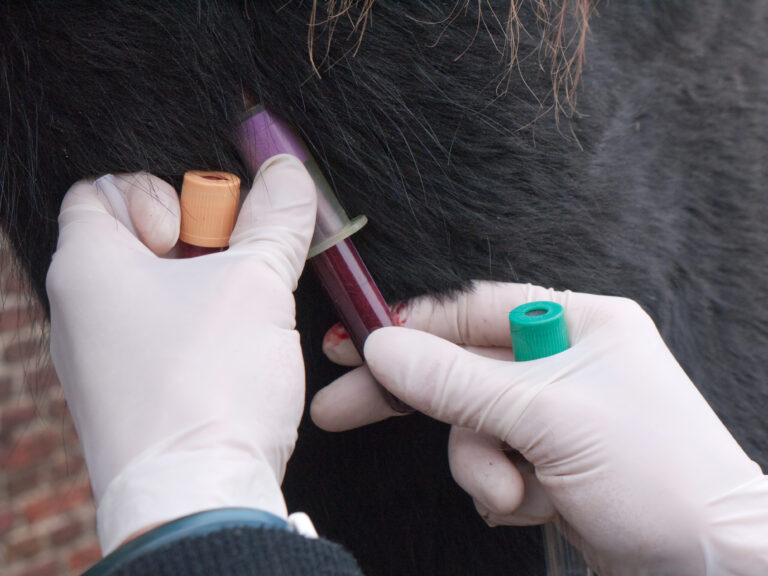
“Treatments with corticosteroids could increase their risk of laminitis,” Broyles said. “That’s when you might consider using orthobiologics such as IRAP. It is a natural product that comes from the horse’s own blood. It is very safe to give in the joint to older horses.”
NSAIDs
Equioxx is a non-steroidal anti-inflammatory drug (NSAID). “It is similar to bute or banamine, but not as potent,” she said. “But it is safer to give long-term.
“So, for generalized soreness or arthritis, we will prescribe Equioxx to be given for longer durations,” she added. “It might be given once a day for a month.”
Related Content
- Study: Older Horses Might Outperform Mature Horses in Showjumping. Kimberly S. Brown. MySeniorHorse.com
- Senior Horse Fitness: A Balancing Act. Coby Bolger. MySeniorHorse.com
- Observation and Palpation of an Older Horse’s Limbs. Dr. Sue Dyson. MySeniorHorse.com
- Caring for Senior Horses’ Joints in Cold Weather. Dr. Sue Dyson. MySeniorHorse.com
- My Senior Horse Podcast: Senior Exercise. Dr. Sue Dyson. MySeniorHorse.com
- Senior Horses in the 2024 Olympics. Kimberly S. Brown. Dr. MySeniorHorse.com
- My Senior Horse Podcast: Senior Competitors. Dr. Tracy Turner. MySeniorHorse.com
Sign up for My Senior Horse’s FREE newsletter to get the latest information about equids 15 years and older delivered straight to your inbox!