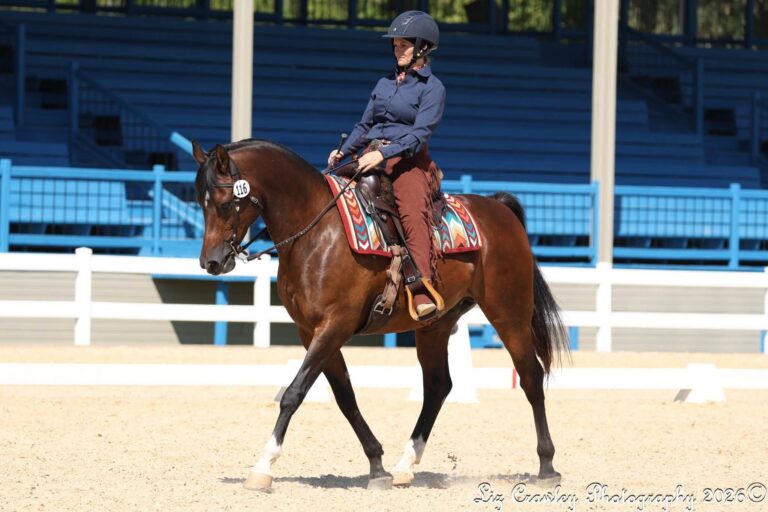
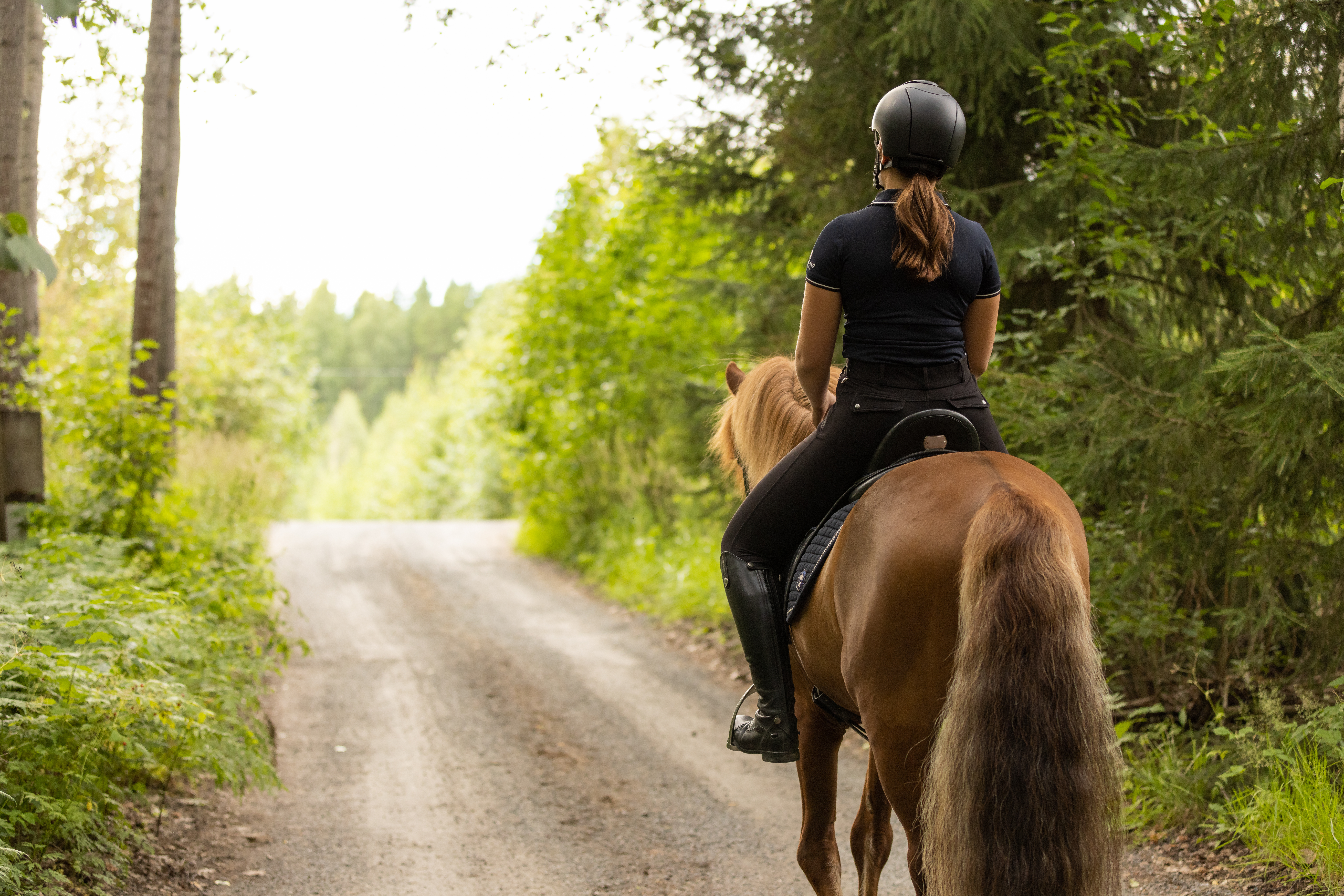
We’ve been hearing it for years: Horses can safely and comfortably carry about 20% of their body weight. But is that actually true? And does the same figure apply to senior horses?
The “20-percent rule” is a rough estimate based on tradition and a variety of study findings leading to recommendations of 17-25% body weight for young horses, says Hilary Clayton, BVMS, PhD, Dipl. ACVSMR, FRCVS, professor and McPhail Dressage Chair emerita at Michigan State University, in East Lansing.
But load capacity depends on many factors, including age, she says. In large part, that’s because horses lose muscle mass in their backs in their later years. “Doing baited stretches and other core strengthening exercises can help,” Clayton says. “But I do think it’s reasonable to back off on the expectations for our senior citizens.”
Currently, there’s no research specifically investigating weight-bearing capacities for senior horses, says Denise Söderroos, PhD, equine exercise physiology specialist at the Swedish University of Agricultural Sciences, in Uppsala. Her own work on weight-bearing included some senior horses up to age 22, and she says they generally fared as well as the younger horses. But it’s important to keep in mind that load limits are “highly individual,” she says.
Factors Affecting a Senior Horse’s Capabilities
In the absence of clear evidence for seniors, Clayton recommends reducing maximum rider weight (including tack) by about 1% per year from ages 20 to 30, and then maintaining or slightly decreasing the weight carried in future years.
But that doesn’t mean starting at 20%, she cautions. It means dropping down from whatever the horse might otherwise be capable of carrying when younger—which isn’t necessarily 20%. Regardless of the horse’s age, weight-bearing depends on breed, training, discipline, rider skill and balance, speed, terrain, the weather, and more. Even the horse’s own body condition (being significantly overweight or underweight) can make it harder to carry rider load, says Shannon Pratt-Phillips, PhD, a professor of equine nutrition at North Carolina State University’s Department of Animal Science, in Raleigh.
“It’s like working out at the gym and seeing people the same size and weight as you, and they’re pumping a lot more iron and able to manage heavier loads,” says Tamzin Furtado, PhD, of the University of Liverpool’s Institute of Infection, Veterinary, and Epidemiological Sciences, in the U.K. “Every horse is different: different genetics, backgrounds, health histories. … Weight limits are going to vary from horse to horse.”
People working out at the gym also don’t have riders on their backs, adds Maria Hallring, a professional saddler based in Förslöv, Sweden. Horses ridden by unstable riders or in poorly fitting saddles, for example, need even lighter loads. “So of course if a horse is older, unfit, or overweight, that increases these issues,” she says.
Rider history matters as well, especially given a senior horse’s years or decades of riding history, says Simone Ravenel, an equine chiropractor and engineer based in Gingis, Switzerland. For example, if the horse was consistently ridden out of balance, overworked, or didn’t receive core stability training during his younger years, certain musculoskeletal structures might have developed poorly or undergone extra wear and tear over time.
Signs a Horse Is Overloaded
In research, scientists use precise measurements like blood lactate, heart rate, and gait asymmetry to assess exhaustion under maximum loads. While that’s useful data, it still doesn’t say what the horse is comfortable carrying, says Söderroos.
So, how can you find out if your senior is comfortable with their load? Observe their body language and behavior.
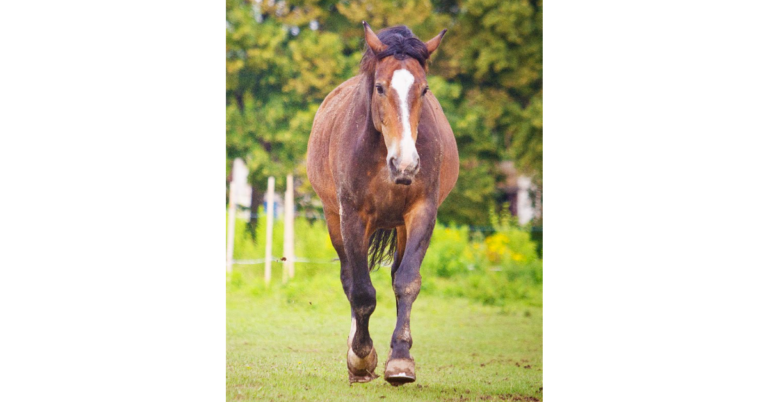
Overloaded horses might tense or drop their backs, Hallring says. Sometimes they’ll place all four legs under their body when standing, or they’ll hold their head high with the pelvis dropped low. They might look stressed or be reluctant to move forward.
“Behavior is a good guide,” Clayton says. “The horse that is still keen to go, moves forward with his ears pricked, and is attentive to what’s going on around him is likely fine. Compare this to the horse that resists the aids to go forward or pick up speed and drags himself along with the neck lowered, tripping occasionally and sweating more than expected for the amount of work being performed.”
Facial expressions and body language will also reveal how the horse feels, says Ravenel. “Watch for all the signs they give of discomfort, like those in the Ridden Horse Pain Ethogram,” she explains. “The more signs the horse shows, the more that horse is struggling.”
Owners can even track their horses’ heart rates with wearable heart rate monitors over the years to see how the horse responds differently to the same exercise as a senior and adjust loads and workouts accordingly, Clayton adds.
If in doubt, says Furtado, riders should seek professional input from their equine veterinarian or physiotherapist.
Related Reading
- Saddle Fitting for Senior Horses: What Changes With Age?
- My Senior Horse Podcast: Senior Exercise
- 4 Misconceptions About Senior Horses With Swaybacks
Sign up for My Senior Horse’s FREE newsletter to get the latest information about equids 15 years and older delivered straight to your inbox!
-
View all posts
Christa Lesté-Lasserre is a science journalist specialising in animal health and behaviour, life sciences, and evolutionary processes. Her articles and stories have appeared in major science magazines and literary reviews in multiple languages across the globe. Based in France's greater Paris area, Christa holds an MA from the University of Mississippi and a BA from Baylor University in Texas, complemented by postgraduate work in life sciences at the University of Paris René Descartes.
A Pulitzer Center grantee for her coverage of the COVID-19 pandemic for Science magazine and recipient of American Horse Publications awards for her articles on equine behaviour, Christa focuses on shaping scientific studies into the stories they tell.