Is your aging horse turning into a sleepy old-timer? Senior horses don’t appear to need more sleep than younger horses, averaging about three or four hours per day. They might, however, struggle to get that much-needed sleep.
Chronic pain and possibly increased vigilance could make it harder for seniors to fall into all stages of sleep, leading to drowsiness and health problems over time, explains Katherine Houpt, VMD, PhD, Dipl. ACVB, professor emeritus at Cornell University’s College of Veterinary Medicine, in Ithaca, New York.
“I think it’s mostly pain,” she says. “They’re just not comfortable.”
Degenerative processes such as arthritis or cumulative injuries over a lifetime of athletic activity can cause aches and pains that interfere with good sleep, Houpt says. If lying down on aging bones and joints is uncomfortable, a horse might wake frequently or avoid lying down altogether. Pain can also make it difficult to bend the legs enough to lie down or push up with the hind limbs to stand.
Older horses might also be less willing to lie down for psychological reasons, she says. While research is lacking, Houpt says it’s possible that they sense they could be more vulnerable to predators and seek a more secure environment. They might also feel their social rank dropping and want to stay on their toes to avoid more dominant horses. Some could even anticipate getting stepped on by other horses while they’re sleeping.
The Risks of Sleep Deprivation
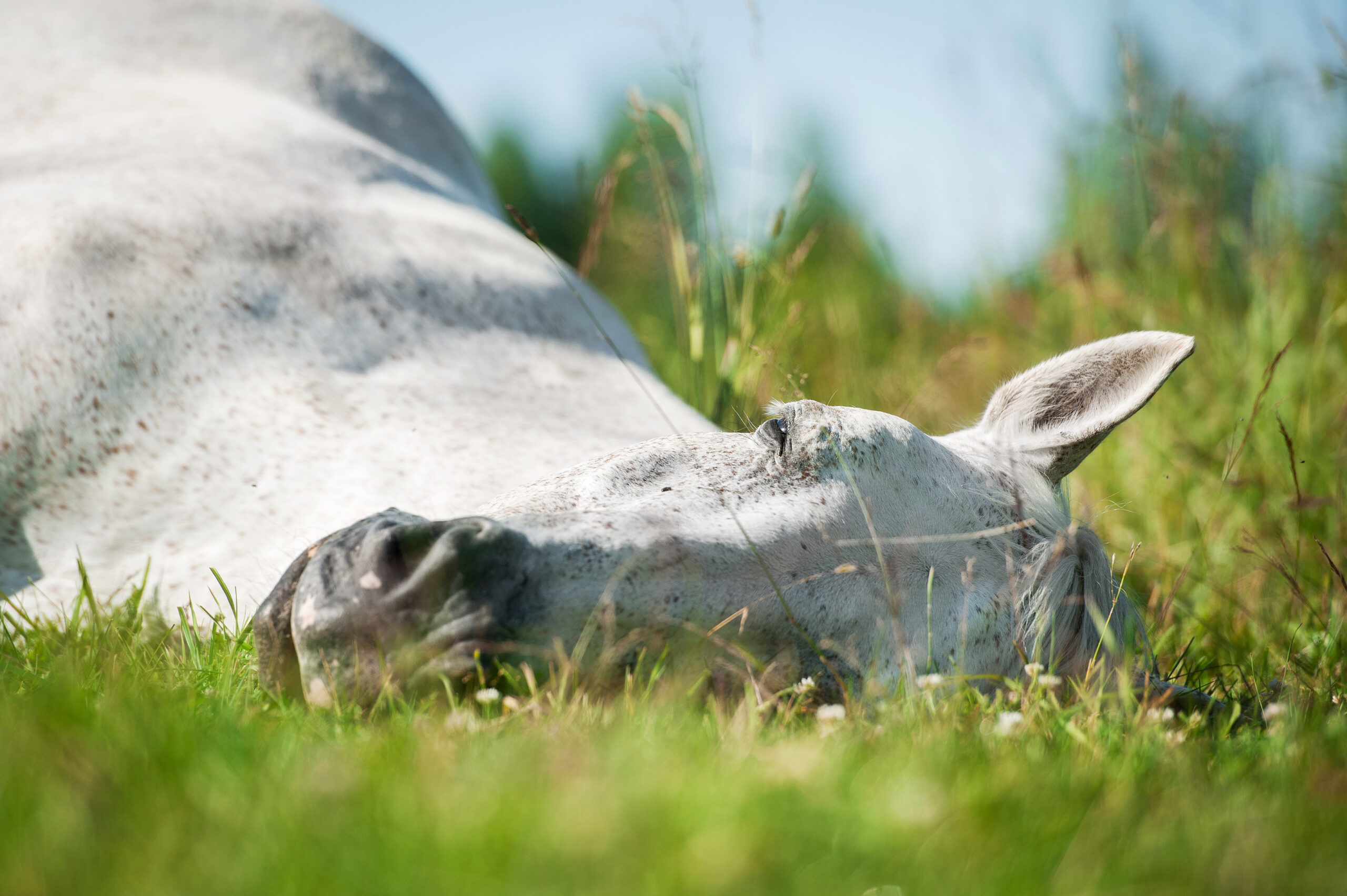
Lying down is critical for good sleep because deep phases involve a level of unconsciousness that causes temporary paralysis, meaning it’s impossible to stay standing. While the “stay” apparatus in horses’ legs allows them to go into light sleep standing up, it’s ineffective for deep sleep.
That can be problematic, says Houpt, since research suggests horses need about 30 to 40 minutes of deep sleep, including REM sleep, per 24 hours. We still don’t know the exact consequences of a lack of deep sleep in horses, but scientists know deep sleep deprivation in humans and rodents affects physical health, immunity, and cognitive aspects such as memory processing.
What we do know in horses, however, is those that don’t get enough deep sleep can experience trauma if they enter the phase while standing. If their body falls into a paralytic state and the stay apparatus fails, they can collapse to the ground.
“They just don’t want to bend those knees and hocks, so they fall asleep standing up,” she says. “And then they fall.”
People often mistake such cases for narcolepsy—a separate but similar disorder—but true narcolepsy is rare and independent of age and pain, she adds.
When a senior horse collapses from sleep deprivation, the physical damage can exacerbate existing problems and take longer to heal, potentially making the horse even less likely to lie down. A cycle of sleep deprivation, injury, and worsening quality of life can develop.
Scientists have yet to fully investigate how age alone affects equine sleep, Houpt says. A recent study of 10 horses showed those aged 18 to 26 got more fragmented sleep on average than those aged 5 to 10, and that they slept less overall. Incidentally, the older study horses also laid down less often and stayed down for shorter periods—although it’s unclear whether that’s due to pain, increased vigilance, or natural age-related changes in sleep patterns. While the research offers a good starting point for studying the issue, Houpt says, it remains limited to few horses and conditions.
Things to Watch for and What to Do
To know whether your senior is struggling with sleep, check for red flags, Houpt recommends. The biggest flag, she says, is pain. Does the horse show signs of stiffness or lameness while walking? When rolling, does he seem reluctant to lie down, or does he plop down somewhat violently and struggle in a sitting position to get back up? Do his feet hurt from laminitis due to metabolic disease? Does he have unexplained wounds or bruising on the knees, which might come from collapse because of sleep deprivation?
Other warning signs include increased sleepiness during the day, dozing off during riding breaks for example, or increased irritability or difficulty learning—although those problems aren’t specific to sleep deprivation.
The best way to know how well seniors are sleeping is to monitor them with high-tech equipment, Houpt says. Accelerometers can be useful, but cameras are ideal. “With video footage, you can really see what the horse is actually doing,” she says. If the horse never lies down, or if he struggles or falls, he needs help sleeping.
Veterinary workups can point to sources of pain and lead to effective treatments such as pain-killers, anti-inflammatories, and evidence-based joint supplements to make the horse more comfortable, says Houpt. Good bedding is also imperative: Deep, clean bedding can provide just the cushion seniors need for their aging bodies. And ideally, they should benefit from separate, secluded sleeping areas where they can feel safe.
“An older horse should have a really comfortable place to lie down, where he can easily see other horses, but they can’t touch him,” she says.
Related Reading
- Equine Arthritis: Exercise and Management Recommendations
- Horses and the Science of Sleep
- My Senior Horse Podcast: Equine Sleep Deprivation
- Horses and the Science of Sleep. Dr. Sue Dyson. MySeniorHorse.com
- Does My Horse Have Narcolepsy or Sleep Deprivation? Dr. Amy Polkes. MySeniorHorse.com
Sign up for My Senior Horse’s FREE newsletter to get the latest information about equids 15 years and older delivered straight to your inbox!
-
View all posts
Christa Lesté-Lasserre is a science journalist specialising in animal health and behaviour, life sciences, and evolutionary processes. Her articles and stories have appeared in major science magazines and literary reviews in multiple languages across the globe. Based in France's greater Paris area, Christa holds an MA from the University of Mississippi and a BA from Baylor University in Texas, complemented by postgraduate work in life sciences at the University of Paris René Descartes.
A Pulitzer Center grantee for her coverage of the COVID-19 pandemic for Science magazine and recipient of American Horse Publications awards for her articles on equine behaviour, Christa focuses on shaping scientific studies into the stories they tell.