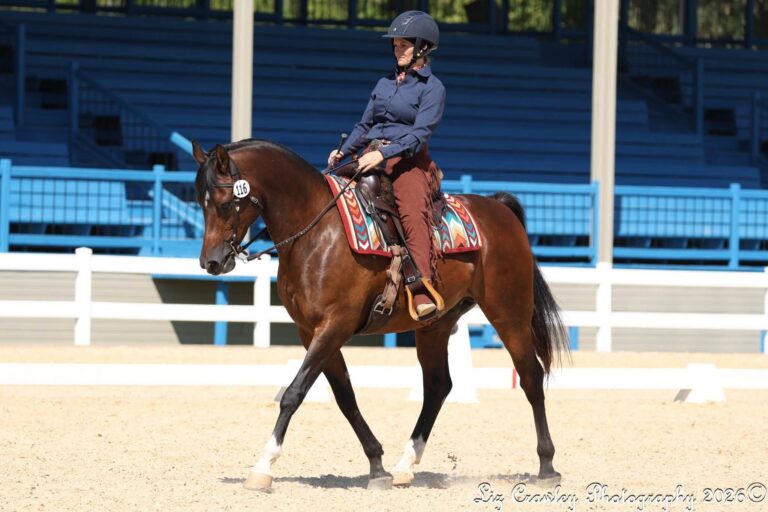
Amid the farmlands, fishponds, and wetlands of southern Poland lies the quaint medieval town of Strumień. It was there, in a region celebrated for its French Anglo-Arabians and native Małopolski sport horses, that Rahma was born.
The year was 1993: Poland had only been free of communist rule for four years, and the country, including its horse industry, remained in upheaval. The new market economy had been slowly taking hold, and state-run agricultural operations and stud farms were undergoing significant restructuring and uncertain futures. Rahma’s sire, a striking and popular Małopolski breeding stallion, started life in a Soviet-era regime and was transitioning to private commercial ownership, with hired hands striving to make ends meet caring for prized horses like himself.
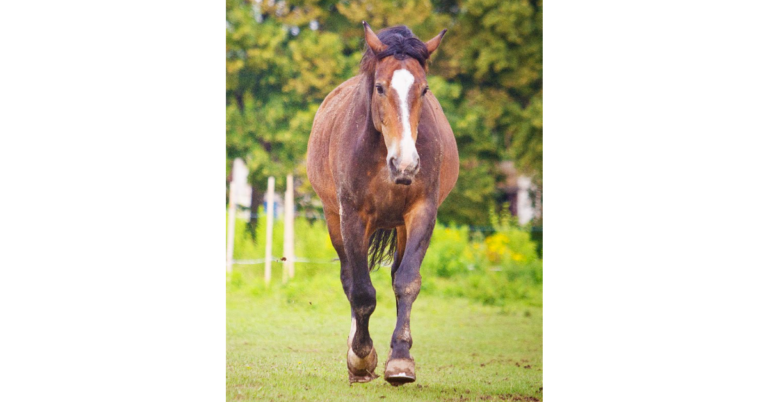
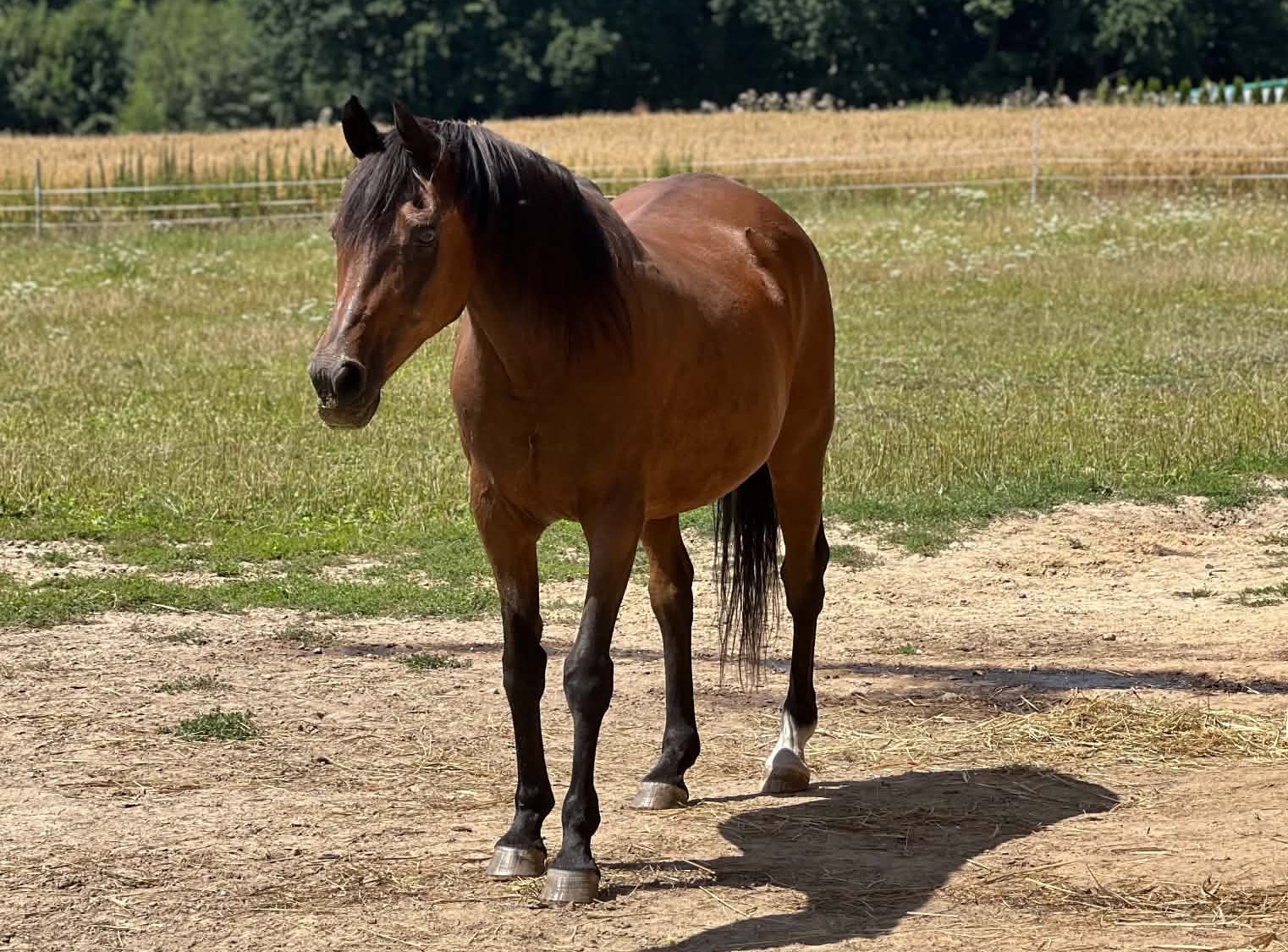
It was one of those hired hands who chose to breed his mare to that renowned stallion in 1992, resulting in a little bay filly he named Rahma—Arabic for “mercy” or “compassion.” Born strong, feisty, and healthy, with one white foot and a star on her forehead, little Rahma would go on to experience intense work, intense change, and intense love.
Rahma would live for decades thanks to her own resilience and that of a determined young girl.
“I’ve arranged my entire life around making sure she has a good life,” says Kasia Humaniuk, who holds an engineering degree in animal science and is a sixth-year veterinary student at the University of Life Sciences in Lublin. “She means everything to me.”
From Stall Cleaner to Lifelong Companion
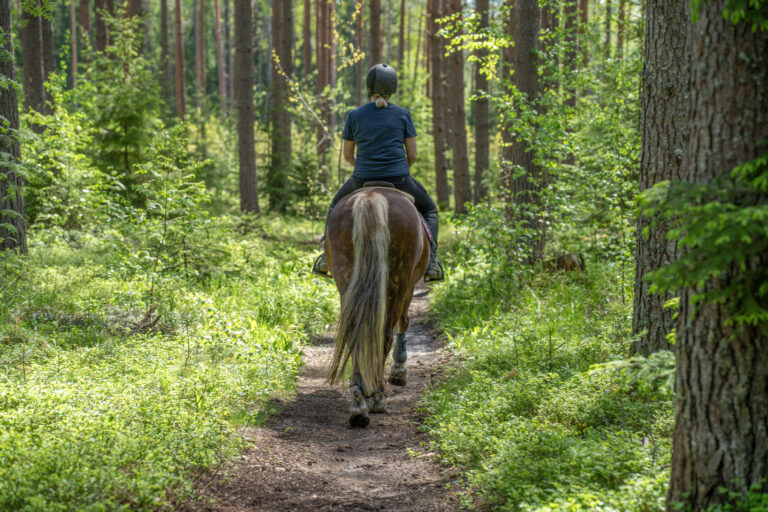
Humaniuk grew up in a free Poland reading books about horse whisperers and rehabilitating difficult horses. In 2013, the 14-year-old walked over to the prestigious stud farms near her home and asked for a job—or rather, a deal: Let me work for you, she offered, in exchange for riding a horse.
One farm accepted the girl’s offer and put her straight to work cleaning stalls. By age 16, she was mucking 22 stalls and hauling away manure, all for the chance to spend time with 22-year-old Rahma.
Humaniuk met the 15.1-hand mare after she’d already retired from years of work in eventing and, later, endurance. She’d foaled five times and was now available for trail rides with the eager and assiduous teenager who kept the barns clean. “I spent every free moment there, even when I had no strength left,” Humaniuk says.
But conditions at the farm were “toxic” for both horse and rider, she recalls. Rahma was “emotionally withdrawn and closed off, and she didn’t like people.” As for the young stable hand, the hard work began taking a physical and mental toll. She says she was pressured to meet the required number of work hours, lest the horse she loved would be given away.
Still, tough times can lead to bonding. “I saw that beneath that hard shell was a very sensitive, gentle horse who was simply afraid,” Humaniuk says. “Over time, she began to trust me, and it was like a dream. She was the first horse I had ever cared for, and with a lot of patience, love, time, and determination, she opened up.”
After seven years of the working arrangement, and just as COVID-19 was hitting Europe, Humaniuk, then 21, bought the 27-year-old mare for 500 złoty, about $130. She moved her to a new farm and, later, to her own home farm.
Learning to Listen to the Horse
With time, the duo have gotten to know each other even better, Humaniuk says. Rahma—whom she now affectionately calls Dziunia, a Polish nickname that means “my sweet girl”—is “very stubborn and likes to get her own way.” But Humaniuk has learned that rather than fight that stubbornness, she should listen to it.
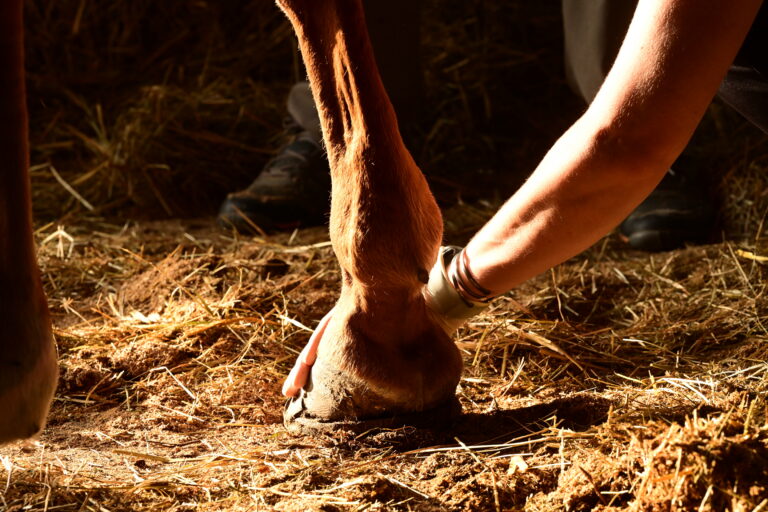
“I started asking her if she wanted to ride, watching her behavior when I saddled her,” she says. “And I kept a record. About 85% of the time, she wanted to go for a ride. But 15% of the time, she didn’t. When she didn’t, there was always a reason for it—she had back pain or foot thrush or something like that. And once that was fixed, she was happy to ride again.”
Humaniuk also got better at reading Dziunia in general, especially in picking up her earliest signs of recurrent colic. “She becomes quiet, subdued,” she says. “She loses her enthusiasm and responds less to everything around her. That’s when I already know something is wrong, and I call the vet to start treatment right away.”
Dziunia developed severe colic at age 30, at which point she wasn’t a good candidate for surgery. Her prognosis was very poor, Humaniuk recalls. “But after three days of intensive treatment—medication administered every two hours and then every four hours; walking her every 20 minutes and then every 30 minutes around the clock; and passing a tube into her stomach—she began to improve,” she says. Three days later, the colic episode had resolved.
The mare grew less interested in riding after that, Humaniuk says. And about a year later, she fell in her stall and couldn’t get up, appearing to have had a seizure. Once again, though, resilient Dziunia recovered.
Today, the thirty-something remains active, her owner tells us. They spend hours together every day going on handwalks, doing groundwork, or playing games, like grabbing Humaniuk’s hat off her head. Dziunia’s favorite might be her “talking buttons.” She’ll press the buttons to say things like she wants to go out for a walk—specifically with another horse. “You wouldn’t believe how well she can communicate with them!” says Humaniuk.
The young woman and her senior horse remain extremely close. “She always wants to be beside me and involved in everything I do,” says Humaniuk. “She follows me everywhere, takes part in everything I do, and is curious about whatever I’m doing. She always wants to spend time with me. Even after we’ve been together for several hours, she doesn’t want me to leave. She follows me to the gate and paws the ground to show that she wants me to stay.”
Strong, Spirited, and Still Going
At 33, Dziunia continues to impress the people who meet her as well as those who’ve known her for ages, including her farrier and veterinarian. “Everyone who sees her is amazed by her behavior, strength, and condition, and by how she looks,” Humaniuk says. “They’re also stunned by how much energy she has, how lively she is, and how eager she is to interact.”
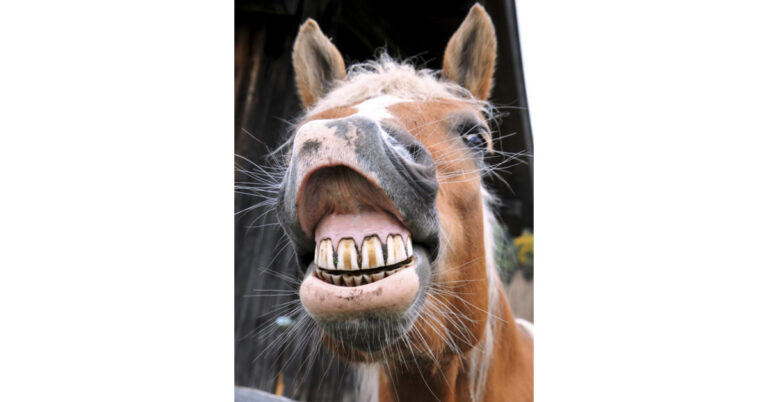
Humaniuk maintains Dziunia on a homemade mix of grass pellets, beet pulp, rolled oats and barley, and vitamins. Because the mare doesn’t drink enough on her own, Humaniuk adds plenty of water into the food. She still has great teeth, despite having lost a few, and eats abundant hay. “I don’t think she’s ever eaten as much hay in her entire life as she does now,” she says.
Dziunia shares a small pasture with her 22-year-old equine friend, Gejsza, with an open shelter where she’s stabled separately at night. Her only regular medication is firocoxib, which she takes for degenerative changes in the hip that sometimes make it hard for her to get up after lying down.
Humaniuk attributes Dziunia’s longevity to genetics, highly attentive care, and personality. “She’s mentally very strong,” she says. “She won’t overexert herself when she isn’t feeling well and, of course, I hear that and won’t push for more. So in a way, she also takes care of herself.”
Humaniuk is quick to say it hasn’t been an easy path getting to this point. But it’s been worth every bit of the hard work. “She’s constantly presented me with new challenges and difficulties, so I’ve had to keep developing in order to meet those,” she says. “But I’d go through all of it again for her.
“I can’t imagine the world without her,” Humaniuk says. “Without her lively personality, her emotions, her stubbornness, and her determination? She’s changed my entire life.”
Related Reading
- Senior Horse Leo Is Still Heeling With a Lion’s Heart
- My Senior Horse Podcast: Senior Exercise
- Get to Know Senior Mounted Police Horses
Sign up for My Senior Horse’s FREE newsletter to get the latest information about equids 15 years and older delivered straight to your inbox!
-
View all posts
Christa Lesté-Lasserre is a science journalist specialising in animal health and behaviour, life sciences, and evolutionary processes. Her articles and stories have appeared in major science magazines and literary reviews in multiple languages across the globe. Based in France's greater Paris area, Christa holds an MA from the University of Mississippi and a BA from Baylor University in Texas, complemented by postgraduate work in life sciences at the University of Paris René Descartes.
A Pulitzer Center grantee for her coverage of the COVID-19 pandemic for Science magazine and recipient of American Horse Publications awards for her articles on equine behaviour, Christa focuses on shaping scientific studies into the stories they tell.